

Why Do Actuarial Risk Horizons Really Matter for Anybody Trying to Improve Patient Outcomes? With Keith Passwater and JR Clark—Summer Shorts 7
August 31, 202320:24

Why Do Actuarial Risk Horizons Really Matter for Anybody Trying to Improve Patient Outcomes? With Keith Passwater and JR Clark—Summer Shorts 7

On our Web site, relentlesshealthvalue.com, there is a little orange button that says send us a voice message. If you have a question, feel free to click on that button and we’ll try to round up a posse to answer your question if we can.  

So, let’s do this thing.

“Hey, Stacey! Really big fan. Really loved the last episode. I had a question. Could you provide more clarity on what the key takeaway was about the actuaries and the different timelines that they’re working on versus physicians? I would greatly appreciate it. Thanks.”

Great question.

And yes, I did kind of drop in an episode something about risk horizons with no explanation. Instead of trying to answer that question myself, I reached out to a couple of actual actuaries, Keith Passwater and JR Clark. I’m gonna play their answers and give a little color commentary before and after to kind of knit together this whole thing into a few succinct takeaways for you.

Keith Passwater is former senior vice president and chief actuary over at Anthem. Keith founded Havarti Risk Services. He brings better risk products and services to healthcare clients. Keith is also a Fellow of the Society of Actuaries, a member of the American Academy of Actuaries, and he serves on the General Committee of the Actuarial Standards Board.

JR Clark is SVP of health plan product and strategy at Paytient Technologies, where he partners with thoughtful employers, insurers, and health systems to help people better access and afford healthcare. JR is known for his public exchange marketplace strategies (and that’s relevant for today) and the creation of alternative products in the individual and small group segments.

So, our panel here is strong is the bottom line. I do want to take a moment to underscore five times that if any healthcare transformation is going to happen, whomever is transforming pretty much anything must—and this is mandatory—they are going to have to be hip to hip with an actuary. But a special kind of actuary—one who applies their considerable smarts to factor in the patient or member as an actual stakeholder in their equations, because what now? Came to discover that in most actuaries’ current models, the impact on the patient or member is not part of their equation. Yeah, yes, you heard that right. Despite the fact that study after study shows that once co-pays or coinsurance reaches a certain dollar amount, patients will start abandoning care, as just one example. And despite financial toxicity being clinical toxicity, and how the cost of care can be a comorbidity, as Cody Coonradt has put it, you only have a small percentage of actuaries who are factoring this in when adding and subtracting and toting up the benefit design.

So crazy, especially because even if you forget about the human aspect here (just ignore it), I’d suspect the math is actually wrong if you ignore the patient as a stakeholder. There are financial consequences when patients abandon meds and care, and some of them manifest fairly quickly—and not in a way that is revenue positive for the plan: Diabetes patients who don’t take their insulin. Guy sees a spot on his arm. Is it melanoma? I don’t know, but I do know I’ll be $600 in the hole if I go see the doctor, so he doesn’t go until it’s really big. I mean, unless the patient dies on the quick, you’d think that there’d be some statistical contemplations about this (ie, how much does it cost plans in the short/medium term when patients who need care fail to seek it).

Actually, Alex Sommers, MD, wrote a post on this the other day. In this post about how much it actually costs when patients abandon care, he references the Four Horsemen of the Apocalypse, which is probably why I remember it.

Any actuaries out there who are taking the patient into account—or health equity is another thing—let me personally give you a round of applause. It’s really easy to feel powerless inside a big machine where everybody is a cog in the wheel, and therefore it’s really hard for anybody to have accountability for the outcomes that we all contribute to.

So, it’s a hugely impressive thing when I meet someone who is figuring out how they can create some net positive patient impact. Okay, so you heard the listener question, “What do you mean by risk horizons?” I played the same question for Keith Passwater. Listen to his response.


You can learn more by connecting with Keith, JR, and Paytient on LinkedIn.
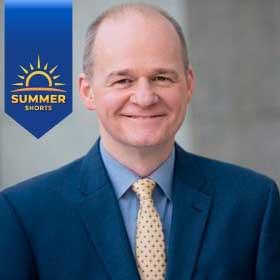
 

Keith Passwater is former senior vice president and chief actuary of Anthem (Elevance). After founding PascoAdvisers and consulting to clients in need of risk solutions, Keith founded Havarti Risk Services to bring better risk products and services to healthcare providers and self-funded employers. Keith is a Fellow of the Society of Actuaries, a member of the American Academy of Actuaries, and serves on the General Committee of the Actuarial Standards Board.


JR Clark is the senior vice president of health plan product and strategy at Paytient Technologies, where he partners with thoughtful employers, insurers, and health systems to help people better access and afford healthcare. JR is a former director and actuary of Anthem (Elevance), where he was known for his public exchange marketplace strategies and creation of alternative products in the individual and small employer segments. JR obtained a bachelor’s degree in mechanical engineering from the University of Missouri-Columbia, is an associate of the Society of Actuaries, and is a member of the American Academy of Actuaries.


02:39 Why is it a problem for actuaries to ignore the patient as stakeholders in benefit design plans?

04:37 What is a risk horizon for actuaries?

05:38 “What’s the time interval over which we hope to impact healthcare costs?”

07:25 What is a risky investment from an actuary’s point of view?

08:05 How do you keep premiums down when the time horizon is short in an actuary’s point of view?

10:31 How do actuaries assess risk horizons or health insurance, and why do they choose those risk horizons?

14:05 What options are on the table when the risk horizon is longer?

16:06 How does the length of risk horizon affect benefit design?


You can learn more by connecting with Keith, JR, and Paytient on LinkedIn.

 

Recent past interviews:

Click a guest’s name for their latest RHV episode!

Lauren Vela (Summer Shorts 6), Dr Jacob Asher (Summer Shorts 5), Eric Gallagher (Summer Shorts 4), Dan Serrano, Larry Bauer, Dr Vivek Garg (Summer Shorts 3), Dr Scott Conard (Summer Shorts 2), Brennan Bilberry (Summer Shorts 1), Stacey Richter (INBW38), Scott Haas


patient outcomes,physicians,healthcare costs,actuaries,paytient,havarti risk services,
|

Episode Support Provided By

Special Thanks to Our 2026 Sustaining Monthly Donors

Kimberly CarlesonDylan YahnBenjamin LightMatt McQuideAnn KempskiSpencer AllenScott TromanhauserMarilyn BartlettSteven ElkinsMatthew Bunte.

Recent Episodes

EP505: The Death of the "What Is Value" Guessing Game for Clinical and Plan Decision-Makers Ready to Move On, With Ahilan Sivaganesan, MD
Relentless Health ValueApril 02, 2026
505
44:0240.31 MB

EP505: The Death of the "What Is Value" Guessing Game for Clinical and Plan Decision-Makers Ready to Move On, With Ahilan Sivaganesan, MD

Listen On Your Favorite App Hello, Relentless Tribe. Thank you so much for showing up today. All right … to start, let me lay out the goal of the episode today. This episode is for you if you are a self-funded employer looking to ensure your members are steered and tiered to real high-value care and...

EP504: A Back-to-Basics Roadmap Through the Perverse Incentives to Advanced Primary Care, With Ryan Jacobs
Relentless Health ValueMarch 26, 2026
504
33:3630.76 MB

EP504: A Back-to-Basics Roadmap Through the Perverse Incentives to Advanced Primary Care, With Ryan Jacobs

Listen On Your Favorite App It's been a while since we started from the beginning, so let's just take stock of the basics in this show, refresh ourselves if you're a longtime listener, or welcome if you're new around here. Today we are digging on and about what I would call the poster child for prov...

INBW46: Relentless Tribe Goings-On With Insights to Outwit the Hot Mess of the Non-Healthcare Market
Relentless Health ValueMarch 19, 202619:3717.96 MB

INBW46: Relentless Tribe Goings-On With Insights to Outwit the Hot Mess of the Non-Healthcare Market

Listen On Your Favorite App This inbetweenisode I wanna try something new for two reasons. One of them is that I need to check this episode off my to-do list because I am crushed for time. I'm going to be headed to Arizona tomorrow for the Collective Health Conference , which will have occurred thre...

EP503: Let's Go From Lazy PPO Networks to Smart Collaboration With Direct-to-Employer Specialty Care, With Ryan Wells; Leo Spector, MD, MBA; and Adam Stavisky
Relentless Health ValueMarch 12, 2026
503
46:1642.35 MB

EP503: Let's Go From Lazy PPO Networks to Smart Collaboration With Direct-to-Employer Specialty Care, With Ryan Wells; Leo Spector, MD, MBA; and Adam Stavisky

Listen On Your Favorite App Today we are digging into something I've said probably way too often: Collaboration is the next breakthrough innovation. And I'm doubling down on this because in the current healthcare landscape, two parties that actually should be talking—like burning up the phone wires ...

EP502: How Some Pretty Wild Medicare Fraud Sabotages ACOs and Also Independent Practices and Could Cost Plan Sponsors Such as Self-insured Employers a Lot of Zeros Downstream, With Brian Machut
Relentless Health ValueMarch 05, 2026
502
38:5835.67 MB

EP502: How Some Pretty Wild Medicare Fraud Sabotages ACOs and Also Independent Practices and Could Cost Plan Sponsors Such as Self-insured Employers a Lot of Zeros Downstream, With Brian Machut

You know, I always kind of wondered what the hackers were doing with all of the medical data that they've managed to get their mitts on over the past, I don't know, however many years. Now, I know at least one thing. If you're a hacker, you can use your stolen medical data to not actually send wildl...

EP501: Speaking of Infusions, Do You Want to Pay $135 or Do You Want to Pay $13,560 for the Exact Same Drug? With Ivana Krajcinovic, PhD
Relentless Health ValueFebruary 26, 2026
501
39:5736.57 MB

EP501: Speaking of Infusions, Do You Want to Pay $135 or Do You Want to Pay $13,560 for the Exact Same Drug? With Ivana Krajcinovic, PhD

Let us chat about today the inches all around us and also about how there is no market in healthcare all at once in this show. Today I am talking with Ivana Krajcinovic. And let me give you some examples of the inches. Two members of a plan get infusions at a hospital. And if these two members had g...

Take Two: EP398: Why Are Commercial Carrier Marketplaces Completely Boring? Maybe Because There Isn't a Marketplace, With Jacob Asher, MD
Relentless Health ValueFebruary 19, 202634:5231.91 MB

Take Two: EP398: Why Are Commercial Carrier Marketplaces Completely Boring? Maybe Because There Isn't a Marketplace, With Jacob Asher, MD

We have been doing a little series called "The Inches Are All Around Us," digging out waste in the $5.6 trillion healthcare sector where half an inch of waste can equal billions of dollars. I'm going to right now introduce another series that is complementary but has a slightly different focus. And ...

Listen and Follow

Sponsored by Aventria Health Group
©2026 BD Bridges LLC. All Rights Reserved.